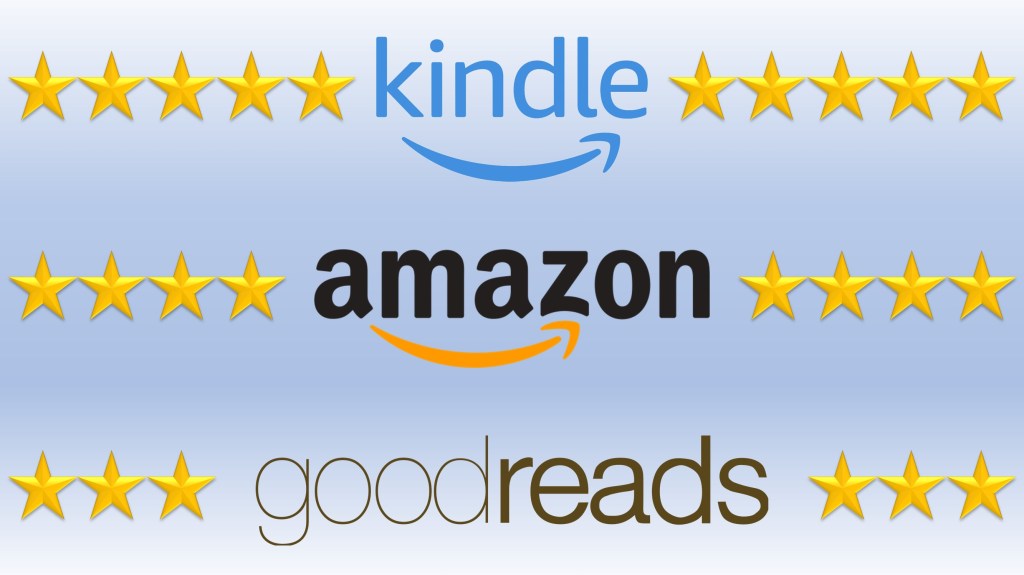
Talk to any indie author about their experience self-publishing or trying to get recognized by a “Big 5” publishing house, and my guess is that within 10 minutes, the topic of reviews will come up. I’ve said it before on this blog and I’ll say it again: reviews are the lifeblood of any indie author. Stephen King or Coleen Hoover’s newest may not need its 80,700th review to make that much of a difference, but for indie writers/authors, that 1st, 2nd, 5th, 50th, 200th review (if you should be so lucky) are absolutely critical. Wondering why? Well you’ve come to the right post.
The very nature of feedback; reviews help writers create better stories!
It may be the simplest reason, sure, but that doesn’t make it any less important. Feedback, just like in your career or sports or your relationships, helps you to improve. Provided correctly, it can help you elevate your game and performance. For writers, that can look like detailed callouts of things readers really liked (“Action scenes were incredible”) or maybe didn’t so much (“I got confused and it had some pacing issues in the middle”). With more feedback comes more themes of where your writing is stellar and “brand-building”, and where your storytelling may need some work. A perfect example of this would be in my beta reading phase for Infinitude. I got some early feedback that shocked me: a married couple (they both read it) was highly offended by the use of a certain event within my novel, as well as some other R-rated elements. Their feedback was well-intentioned (delivered a tad harshly, IMO) but it forced me to action as I deliberately asked other beta readers if they had the same issues. Luckily, no one else had similar sentiments, but the feedback was what led me to pause, and research further.
Reviews can create visibility in a saturated market
This section will be mostly specific to Amazon, but can likely be applied for many other retailers like Walmart, Barnes & Noble, or even Goodreads, which doesn’t sell books, but can heavily influence an author’s success. With potentially as many as 4 million books published annually, how does one hope to stand out?!
As the biggest retailer in the world, and the main place where many authors go to self-publish thanks to the ease of KDP, Amazon has a sophisticated ranking system for all of its products, including books. Ever wondered why you get recommended certain products? Or why certain items are higher on your page than others? They – and especially the crowded book market – all rely on reviews, among other things, to influence their ranking. There’s a lot of “mystery” surrounding Amazon’s ranking algorithm, which, thanks to this insightful article, I found out is less mystery and more needing to piece together the fine print while knowing specific algorithm jargon.
Basically, the ranking of any given item factors in the following: verified reviews + new reviews (< 1 month old) + reviews that have been upvoted. There are other things that help like sales, and CTR (click-through-rate), but if you’ve ever purchased something on Amazon, I imagine you lean on reviews heavily. I know I do! And for those items with 4, or 5-star reviews specifically, having more, and a higher average of those can help you outrank (and be suggested) over competitors.
What I found most interesting in this research was the impact of verified and unverified reviews. “Verified” means that there’s proof you purchased the item, and thus can accurately speak to its quality. “Unverified” reviews may come from the ARC readers I plan on enlisting, or other reasons I may choose to give books to someone without a purchase (The Mask of a Marriage free PDF for subscribing to the blog is a perfect example of a review YOU could provide me, but would be “unverified”). However, while Unverified reviews don’t factor into ranking – or at least not as much – they build “social proof” by creating a higher quantity of reviews. Ever chosen a 4.5 star product with 2,000 reviews instead of a 5-star product with 3 reviews? Now you can see the influence of more reviews being helpful.
Reviews inform others of what they’re buying
Tangentially related to my previous point, but worth calling out on its own, when people review things like books, movies, etc., they often include details about the product. The genre, the mood it created, the types of scenes it featured, the emotions it evoked…these are all crucial elements to help potential buyers/readers to better understand if my story is something that interests them. Reviews accomplish this better than any book title, blurb, keyword tagging, or genre tagging could ever do. They’re more specific and genuine, potentially helping someone who usually reads murder mysteries decide if they’ll enjoy this foray into a sci-fi adventure, for example.
So how can you help?
This one is easy! Write reviews and/or rate indie books that you’ve enjoyed! Obviously, my angle here is “Please do that for my stories!”, but it really applies to the entire indie author community. If you read a book and generally enjoyed it – or hopefully loved it – leave that person a review on the site you got it from or some sort of app like Goodreads. Not only does it make their day, but in an algorithm where every review counts, it can actually affect their success.
And what about negative reviews? What if you hated something? Or maybe you didn’t finish it? There’s a lot of debate around if people should give 1-2, or even 3-star reviews to indie authors. These ratings can actually hurt an author’s ranking…but at the same time I believe the writer should be putting out a good product and taking the criticism on the chin. So I say: to each their own. If you truly have feedback to share about something you didn’t like, consider that it maybe just wasn’t your genre OR consider sharing it with the author via email. If you’re leaving a review to be malicious, then please just…don’t.


 J. T. Rath
Leave a reply to Advanced Review Copy (ARC) Form for Infinitude – J. T. Rath Cancel reply