
I’ve found one of the more rewarding things about storytelling and writing the last few years has been to expand and push my skillset. I know I’m not the world’s best writer, so I strive to become a better one. I’ve taken courses (via an awesome, inexpensive package on Infostack) and read a few books, even downloading some new systems – e.g. Scrivener – to expand my toolkit.
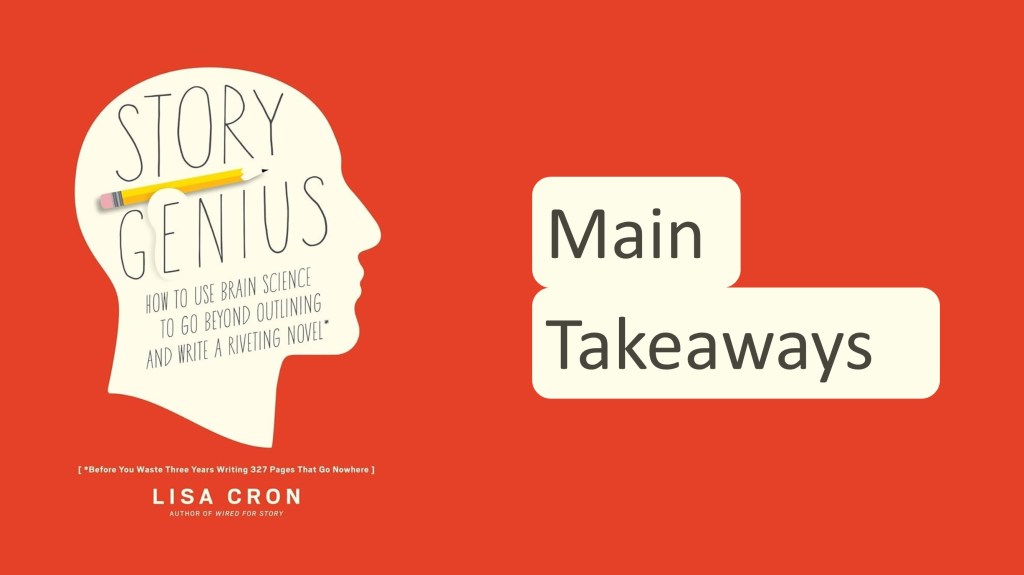
Now that I’m officially “in between” Infinitude and whatever may come next, it’s a good time to pause and read a couple storytelling-improvement books I’ve had for a while. The first of which is Story Genius by Lisa Cron. This helpful guide is an organized approach to not only laying out your book, but discovering your protagonist’s “why” before anything else.
I found it insightful as I sometimes feel like I have this issue with my characters and I have to remember to strike a balance of having characters and their “why” drive the story, not always events of the plot (which is what I tend to lean toward). So with that said, here are my main takeaways from the litany of notes I took on Story Genius
1 | The story’s direction should be driven by your protagonist’s “Third Rail”
In this sense, “Third Rail” is the inner conflict that your protagonist will face throughout, guided by two specific questions:
- What does your protagonist want or desire?
- What misbeliefs keep them from obtaining/achieving it?
- Example of a misbelief: “I am not worthy of love because I was never shown it as a child” (Mom/Dad if you’re reading, please note this is not true, just an example!)
The story should really be about your protagonist shifting and changing their misbeliefs (or not, but having clear reason why) with distinct “why’s” for their actions.
Because I f**king love Oppenheimer and I read the entire beefcake book, American Prometheus, using him as a central character can provide a good example. I won’t pretend to be in his head, but I feel like I know enough about him to take a stab. Oppenheimer wanted to be a great physicist. One that was recognized, world-renowned, and would make an impact. He didn’t openly crave this, but given his level of ambition and effort, it’s discernable. In his quest for this aspiration, he agreed to do uncover something no one had done before, resulting in a weapon so catastrophic, it’s still feared today…encroaching on a century later. After the use of said weapon – and the death of thousands – his outlook changed. There was immense guilt on his shoulders, and he was ostracized within his own community. Had the goal been worth the price? Perhaps his inward misbeliefs were incorrect? As a story, clearly, it’s a compelling narrative and this is the sort of inward conflict that Story Genius promotes
2 | Scene planning is essential
One of the things I loved most from Lisa’s guide is how she provides structure and direction (I have a list of probably 20 “to-dos” before I start writing a new story), without being overly restrictive in her approach. She encourages you to write – or at least plan – several scenes early and out of order. Ones like the opening scene, the protagonist’s “origins”, the antagonist’s “origins” (if necessary), and even the climax and ending. It could feel uncomfortable to write some of these that early…I’ll likely focus on planning my ending vs. writing it completely, but the approach makes sense. The more you know about you protagonist and where they’re going, the more you’ll know about the story.
For each scene, she suggests a template that documents what will happen in The Plot and how it will impact The Third Rail. There are other minor notes for subplots, character points, and where the scene starts too, but the bulk of the template’s surface area looks like this:
| The Plot | Cause – What happens? | Effect – What are the consequences? |
| The Third Rail | Cause – Why does it matter to your protagonist? | Effect – What is their realization? How do they change? And so…? (how does this lead into the next scene?) |
As a PowerPoint afficionado, I plan on building this template in that application before my next story. I’m excited to build these out as I truly believe it’ll not only be useful for organizational purposes, but also to consistently remember my protagonist’s “Why?”
3 | Specifics beget more specifics
This one may seem self-explanatory, but it’s more layered than I initially believed when Cron first uses that phrase. Specifically…pun intended I suppose…these specifics or details come from consistently asking “Why?”
- Why does that character do that?
- Why would they believe that?
- In what ways does their their past drive their decision making?
- Why do these two (or three, or four) characters have the relationship they do?
Answering each of these questions begets more questions and deeper layers of why, uncovering more specifics and details. The point is NOT to include all these details in your story’s writing, necessarily, but to have a better understanding of your own characters and their world. The more you know your details, the easier it is to write plot direction and incorporate your protagonist’s Third Rail, or know when to pause and dig into more questions.
In Conclusion…
If you’re an aspiring writer, or even an experienced one, I will always recommend training and reading to continue honing your craft. Not only is it satisfying and largely interesting, but there are so many tools out there to help write better, tell stories better, hook readers better, etc. that it can only help to expand the toolkit you’re pulling from. Lisa Cron’s Story Genius is one such very helpful guide.

 J. T. Rath
Leave a reply to Save the Cat! | Toolkit Overview – J. T. Rath Cancel reply